


CALLS FOR SHOCK COLLAR BAN AFTER DAMNING RESEARCH
Vetsonline, July 25/13
The Kennel Club (KC) is urging the Government to ban electric shock collars for dogs after two different research studies found "conclusive proof" they could actually cause more behavioural problems than they solve.

The Kennel Club has long been campaigning for a ban on collars, and has successfully achieved one in Wales.According to the KC, a study funded by Defra found dogs treated with an electric shock collar displayed negative behavioural and physiological changes in comparison to a non-electric shock collar control group. It also, said the club, "provided evidence that some owners even failed to consult the accompanying instruction manual before using the device on their dogs".
The second piece of research, which involved the Electronic Collar Manufacturers Association (ECMA), also concluded, said the club, that electric shock collars are not more effective than positive reinforcement methods – such as reward-based training – for recall and chasing, which are often cited as the two main reasons for the use of such devices.
Court of Appeal upholds Government policy on electronic dog collars
The Court of Appeal has dismissed an appeal by manufacturers of electronic dog collars in respect of the Government’s proposal to ban the use of these devices in England. Full article here
start of pageFrance to Ban Training Collars that Cause Pain to Animals
by Hanna Thompson, Connexion France, Jan. 2023

"MP’s voted on January 16 in favour of banning all “use on cats or dogs of any device that has an electrical charge, a looping collar which tightens without a restriction or which has spikes turned in towards the animal’s body.” Full article here
San Francisco May Be First City in the Nation To Ban Dog Shock Collars
by Liz Lindqwister, The San Francisco Standard Jan 2023
... Last fall, SF dog trainers and animal welfare advocates proposed a shock collar ban for the city of San Francisco, the first of its kind for a major metropolitan region. Full article here
Results re: Pets & Shock Collars Surveys
Although some animals will respond to being shocked by shutting down, a state of learned helplessness, others will deal with their pain by directing their hurt and torment at whomever is close by. Regardless, of which response, helplessness or rage, the physiological impact, suffering and medical issues that can conceivably result from shock collars are not worth the risk. Interacting positively with kindness and patience with our dogs works beautifully to encourage and support good behaviour. Our pets are powerless to direct how they are treated, who will ‘own’ them and how to appeal for mercy when their lives are intolerable. Animals need us to be their white knights.
Surveys show us the majority of people find shocking animals is wrong. Please write, call or visit your government representatives, local pet stores, friends and family and let them know electric shock devices are insupportable and discreditable. Please sign the petition to show your support to ban shock collars HERE.
Ban Shock Collars stats from Pets & Shock Collars Survey Monkey Poll - CANADA, 2017
- * 71% polled said they have never used or let anyone else use a shock collar on their pet.
- * 71% polled felt that it was cruel & inhumane to use electric shock devices for training and managing pets
- * 72% polled would support legislation banning the use of shock collars on domestic pets
**********************************
Ban Shock Collar stats from Pets & Shock Collars Survey Monkey Poll - USA, 2017
- * 83% polled said they have never used or let anyone else use a shock collar on their pet.
- * 50% polled felt that it was cruel & inhumane to use electric shock devices for training and managing pets. A significant number of respondents to this question, 27%, did not know what a shock collar is or had no opinion.
- * 47% polled would support legislation banning the use of shock collars on domestic pets. A significant number of respondents 33% stated they were unsure.
**********************************
The Kennel Club UK Electric Shock Collars Research
Key Statistics from Research into Electric Shock Collars UK 2014
- • 1 in 4 dogs showed signs of stress compared to less than 5% of dogs in the non-electric shock collar control group (Defra commissioned study AW1402, 2013)
- • 1 in 3 dogs yelp at the first use of electric shock collar and 1 in 4 yelp at subsequent uses (Defra commissioned study AW1402, 2013)
- • 73% of the public disapprove of the use of electric shock collars on dogs (Kennel Club commissioned survey, 2014)
- • 79% of the public agree that positive reinforcement training methods can address behavioural issues in dogs without the need for negative training methods (Kennel Club commissioned survey, 2014)
- • 74% of the public would support the government introducing a ban on electric shock collars (Kennel Club commissioned survey, 2014)
To view Kennel Club Campaign page CLICK HERE
start of pageBrussels to ban controversial dog collars
Monday, June 6, 2022, The Brussel Times
Controversial dog collars - such as those that give electric shocks, choke chains and spike collars - will soon be banned in the Brussels -Capital Region for welfare and ethical reasons. Full article here
Mondou removes aversive collars from all its stores for the well-being of animals
CNW Telbec, Oct. 18, 2021
Mondou, the 100% Quebec-based family-run business with a strong passion for animals since 1938, announced that it is removing all aversive collars from its stores as of today. This decision is in keeping with the core concerns and values of the chain, whose belief is that animal welfare is paramount, and follows the release of a report by Mondou's Comité aviseur en bien-être animal (CABEA), which concluded that alternative techniques and products are now accessible to all. Full article here
PetSafe Shock Collars Falsely Touted as Safe, Dog Owner Alleges
Oct. 24, 2022, Bloomberg Law
PetSafe-brand shock collars are falsely marketed as “safe” and “harmless” tools for preventing unwanted behavior in dogs when they cause physical and psychological harm, a California dog owner says in a proposed class action against manufacturer Radio Systems Corp.... Full article here
Shock Collar Complaint Legal Document here
Animal Shelter Slams The Rise In Shock Collars
Pet Gazette, Domonique Wilsher, Feb. 2017

“...We are now working hard to undo the damage done to the animals that have been signed over to the Shelter, who have been living in fear of shocks and unsure why or when the next one is coming...” Full article here
start of pageTHE END FOR SHOCK COLLARS?
Companion Animal Psychology Wednesday, 19 June 2013
Excerpt…
Something puzzles me about the arguments made by shock collar advocates. On the one hand they claim the e-collar doesn't hurt, and on the other they say it's a last resort to prevent 'dead dogs' due to recall and chasing problems. Surely the second justification casts doubt on the first? Two new scientific studies funded by the UK's DEFRA address both arguments, and conclude that e-collars are unnecessary and detrimental to animal welfare.

Shock collars (including invisible fences) are already banned in many countries because of welfare concerns. The DEFRA studies aimed to investigate the welfare of dogs trained using e-collars. The results will surely add to calls for shock collars to be banned in England and Scotland (they have been illegal in Wales since 2010), and elsewhere.
The first study (Defra AW1402) included extensive pilot work, an investigation of the electrical resistance of wet and dry dogs (conclusion: wet dogs get zapped more), and a comparison of the features of several purchased shock collars.
Only a handful of instruction manuals stated that vocalizations indicate the shock is too high. They did not explain all features well, particularly the warning tone or vibration which is meant to precede a shock (not all models had a warning tone). Most manuals suggested use of the continuous shock option that is stopped when the dog does the required behaviour, rather than a momentary stimulus (for quadrant enthusiasts, this is using the collar as R- rather than P+). One of the collars, bought over the internet, turned out to be a counterfeit with no cut-off for the continuous shock, and two of the genuine collars had faults.
Full article HERE.
start of pageOwner sickened after dog sitter fits puppy with anti-bark collar without permission
by Jilly Beattie & Nia Dalton. Mirror UK, May 2022
A woman is calling for tighter restrictions on home boarding businesses after her puppy was fitted with an anti-bark collar without her knowledge.... Full article here

He isn't an overly vocal puppy and is still training ( Image: belfastlive.co.uk)
Couple shocked after dog’s daycare stay
by Stefanie Lasuik, August 2018, Winnipeg City News
..."They say Maxx didn’t want to do anything and seemed in distress. After they examined him more closely, they found a shock collar tightly fastened around his neck....” Full Article Here
start of pageDog Owner’s Shocking Find
Madison Erhardt, Jan 2019, Castanet.net Kelowna
..."He wore the shock collar for just five nights. We woke up one morning to the smell of burning flesh and thats when I noticed the collar had burnt into his skin causing four big lacerations.” ...Full article here
COLLARS 'TURNED DOGS INTO KILLERS'
THE ARGUS - Thursday 25 October 2001
Excerpt... The old lady was sitting on the floor crying and her little dog was lying there, wounded but its tail was still wagging. "It was taken to the vet's but they had to put it down. "I was in a right state because they had never harmed anyone or anything before. They grew up around cats and other animals. "I asked for the help of experts and even the Army and it was then I realised it was because of the electric shock collars. "They connected the pain of the electric shock with little dogs because of the first time I used the collar. The day that machine came in this house I regret." ...Full Story Here
Louth councillor calls for anti-bark shock collars awareness campaign
May 2022, by Donald McCabeLouth live
Louth Sinn Féin councillor, Joanna Byrne, has called for an awareness campaign to be launched on anti-bark shock collars for dogs, following the presentation to councillors at the Louth County Council May meeting, of pictures of horrific wounds to a 6 year old collie dog. The collie dog was treated by Louth County Council’s Veterinary Officer and nurse, for wounds around its neck which were badly infected... Full article here

Another dog dead because owner’s used an invisible fence and shock collar instead of a real fence
Prosecution Declines to Charge Man Who Admitted He Shot Neighbor’s Dogs
Bill Wyatt, Martinsville Bulletin, Jan. 15 2022
Excerpt... ""Our dogs got out of their wireless fence during the early morning hours of Dec. 23," Scott said. "I was in and out with a very sick baby. Scott said her husband, Jeffrey, got home from work around 4 p.m. that afternoon and the dogs weren't there, so he rode around the Bassett neighborhood and looked for them.” ...Full article here
Cesar Milan Training Method's Barbaric
UK television host Alan Titchmarsh interviews controversial dog trainer Cesar Milan, calling his methods barbaric, including that he punches dogs in the throat and uses spike and shock collars.
PET THERAPIST: THE SHOCKING TRUTH BEHIND SHOCK COLLARS
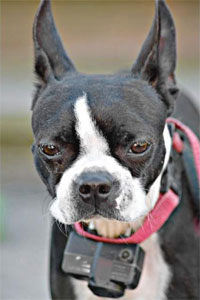
Dr. Rebecca Ledger, The Vancouver Sun, November 2013
...“I saw a dog last week who cringed and tried to bite whenever the owner grabbed for her collar. It turned out that she had extensive injuries to her neck where the prongs of the shock collar had eroded through the skin in several places and became infected. She is going to have permanent scarring. Sadly, I have seen many dogs with this kind of injury.”
Dr Wilkie typically sees three or four cases like this every year. Based on the number of licensed veterinarians working in B.C., there are potentially thousands of similar cases within our province annually.”... Full Article Here
Electric collars for dogs inhumane and should be banned
By LIANG XUTIAN, NOVEMBER 10, 2020
..."I write in response to Mr Gerald Tan Han Jie’s letter, “Don’t ban e-collars for dogs; educate owners or regulate use instead” (Nov 8). The use of electric collars (e-collars) has no place in humane methods of dog training as many research studies have shown. Many reputable dog training organisations and certifying bodies have echoed this view. Unfortunately, there are trainers who are misleading dog owners into believing that dog obedience must be achieved only by the use of e-collars....” Full article here
Virginia Police Dog Attacks Colt
WVIR-TV
Augusta County Va.(WVIR) – Virginia’s Albemarle County Police Department is investigating one of its own K-9 officers after the dog allegedly attacked a young colt.
"...The dog ripped a gash in the horse’s hindquarters. Hatton says the officer turned the dog’s shock collar to its highest setting but the K-9 still wouldn’t back off. “He, evidently, attacked to kill. It wasn’t just a warning,” Hatton said….” Full Story Here
 start of page
The evidence is clear. Shock collars & other brutal training methods leave dogs and people in harms way. Police canine squads need to update their methods to incorporate positive humane reward based training methods without punishment. Police and military in the UK have proven training highly effective dogs is acheivable without the use of shock collars. It’s time others followed their lead.
Disciplinary hearing clears Edmonton police dog handler after woman's 'catastrophic' 2015 bite injury
Jonny Wakefield, Nov 15, 2020
excerpt... When that didn’t work, Lang attempted a “flank” technique, in which a handler squeezes the skin between the dog’s abdomen and rear legs (a last-ditch technique is to grab the dog’s testicles and twist). He quickly realized he could not reach either part of the dog’s body, as Fozzy’s belly was to the ground. Lang then “fumbled” for the e-collar remote, turned up the intensity and pressed the prongs into Fozzy’s skin. Fozzy finally let go... Full article here
The Shocking Use of ‘Jiggers’ in Horse Racing
Paul McGreevy, Robert Boakes, The Conversation Canada, February 2019
..."The aversiveness of jiggers relative to strikes from padded whips will depend on the voltage discharged, not to mention the wetness (and therefore conductivity) of the haircoat of a horse. So there is no such thing as a standard jigger zap, just as there is no such thing as a standard whip strike. And while there are some limits on the number of whip strikes that can be inflicted on a horse during a race, there are none for whipping at home in training."... Full article here
start of pageHe Didn’t Deserve This

Here is the tragic story of a healthy 15 pound Maltese/Shih Tzu cross who suffered severely because a training franchise was able to sell their services to an unwitting loving dog owner who was simply looking for help. Instead she was led into a cruel deception with her dog paying the ultimate price. And people ask us, why are we calling for a ban. Well, here is why. Full Article Here
start of pageX-RAY FOR FOX CAUGHT IN ELECTRIC FENCE
by Clarissa Place, Nov. 2021, IPSWICHSTAR
A wild fox found with a metal wire in its stomach is recovering after being freed from an electric fence. Full article here.
start of pageK-9 Demo Didn’t Turn Out As Expected
by Karen Fazio, NJ.com, August 2018
..."One of the common sales hooks some dog trainers use when owners are searching for qualified candidates is "I trained military and police dogs," to explain why they use prong collars, choke collars or fear and intimidation to train.... ...I've spent the good part of a nearly 15-year career in canine obedience educating the public on why it's so unnecessary to use alpha- and dominance-based techniques to train, and why the whole police and military dog training excuse for using such methods is just that ... an excuse.”... Full Article Here
 start of page
The Truth About Shock Collars, And Why You Should Say No To Them.
Matthew Bridges, Sales Manager, Barkmate
Before we start, it should be made clear that this is not just another reactionary topical argument by a person/company who has no practical experience with the products in question. In mid-2010, after five years of being one of Australia’s leading sellers of static correction collars, we made the decision to no longer sell or support ‘shock collars’... Full Article Here
SHOCK COLLARS - AN INSIDER DETAILS THE LIES
Matthew Bridges, Barkmate, 2012
" ..."Will this Shock Collar be effective in stopping my dog barking?" is like asking "Will this prescription migraine medication be effective in stopping my mild headache? Just because something is effective doesn't mean it's advisable, or even safe. But when there's money to be made, and the law doesn't require a retailer to elaborate on a deceptively truthful answer, why would they clarify otherwise? It's not their dog they're subjecting to the Shock Collar, so they have no personal investment in the situation aside from selling you a product.” Read More Here
start of pageMy Beloved Beagle Badly Burned By A Shock Collar – June 2015
 start of page
ELECTRIC SHOCK COLLARS: MINISTERS REJECT INVISIBLE FENCES PLEA
BBC News
10 April 2013
The Welsh government has rejected calls to relax the ban on electric shock collars for cats and dogs so pet owners can use so-called invisible fences.
Ministers say they see no reason to change the law after a petition to the Welsh assembly. Petition organiser Monima O'Connor from Cardigan says invisible fences can protect pets from busy roads. The devices automatically shock animals through their collars if they wander too far from home. Electric shock collars have been illegal in Wales since 2010 and anyone using them can be fined £20,000 or jailed for up six months. They deliver a shock through the pet's collar if it crosses a boundary, such as a wire buried at the edge of a garden.
start of pageUnauthorized Use Of Shock Collar Angers Dog Owner
Reported by: Kelsey Thomas
LAS VEGAS (KSNV My News 3) – A Southern Nevada man wants to warn all pet owners about who they trust to watch their beloved pets after he found his dog wearing a shock collar... Full article here
start of pageMidstate Woman Says Kennel Used Shock Collar On Her Dog
by Logan Wilson, March 2019, abc27.com News
..."He just completely withdrew and isolated, and it was like he looked broken when he came back," said Hastings.”... Full story here
start of pageDog Shocked by Collar in Pet Boarder’s Care Suffers Severe Injuries
Local10.com, Miami Florida, April 27, 2015
This is a sad and upsetting report of a family that left their two Corgis in the care of Broward Pet Sitting only to come home and find deep holes burnt into their dogs necks from shock collars. Shock collars used without their permission. Vet diagnosed the injuries as traumatic thermal burns.
start of pageInvisible Fence fails to protect Chihuahua
Dogs Running Loose Kill a Pet
Natatlia Bledsoe Fredericksburg.com Feb 17th/11
Today on Goodloe Drive, two large dogs attacked and killed a small Shih-Tzu/Chihuahua mix named Sammy who was sunning himself in his own front yard. The two aggressors were a Pit Bull and a Pit Bull/Mastiff mix that got loose from their owner's fenced yard on Twin Lake Drive. The attack on 7-pound Sammy was reported by a neighbor who saw the dogs on the property. Sammy's owner was not at home during the violence. Sammy's yard is surrounded by invisible fencing, which kept him in but unfortunately does not keep other animals out.
When Animal Control Officer Tom Worthy was dispatched to respond to the incident, he recognized the description of the larger of the two dogs as one whose owner had previously been cited for allowing it to run loose. After seeing Sammy's remains, Tom found the two dogs back at the home of their owner, Celia Ventura, and she voluntarily surrendered the dogs to Officer Worthy for euthanization. Ms. Ventura was also arrested for two counts of allowing dogs to run at large.
Owners of dogs have a legal responsibility to keep their animals under control, for the welfare of the dog itself and for the safety of the general public. Owners of large dogs need to be particularly aware of their dog's potential for causing harm, even unintentionally. I am an animal lover and the owner of an obedient 50-pound dog who is a threat only to the resident City squirrels. I have a 6-foot security fence around my back yard and when Hank leaves the property, he goes on a leash. It's the law.
start of pageFedEx driver hits 13-year-old dog while dropping off package, then drives away
by Matt Howerton, November 12, 2019,WFAA.com
..."The Jenkins family owns several dogs, along with Milo, and they can be seen outside roaming free. The family lives in a rural area of Caddo Mills, and like most who live in the country, the dogs are fitted with shock collars that keep them close to the house.”...
The dog, Milo, is expected to be all right, and the family tells WFAA that FedEx has agreed to pay for vet bills. Full article here
start of pageAs Wf Woman Mourns Loss Of Dogs, Farmer Says He Had To Protect His Property
by Joshua Peguero, Sept. 2019, Valley News
...Kringle said her dogs ran away Monday night, despite having shock collars on them and an underground fence around her home. The dogs have escaped before in the last few weeks as she’s been training them to stay in her yard... Full Article here
start of pageDeputies Say Stolen Dog Returned to Owners
Oct. 2018 -Fox35
"...The yard has an electric fence and Reba was wearing a shock collar."... Full article here
start of page
DOG COLLAR HAZARD
CBC News
February 16, 2012 News > Canada > Manitoba
An electric dog collar, meant to keep a canine in line, has sent a Winnipeg woman's pet under the knife for major surgery.
Here is another dog burned badly by an electric shock collar. The owner's claim the manufacturer wasn't surprised about the damage because the collar was left on the dog "too long".
start of pageBoarding Your Dog in Tualatun, OR? Avoid Canine Country
excerpt…Canine Country, Tualatin, Oregon’s owner, Shawn Riley, injured my dog a few years back. Looking for a place to board your dog this holiday season? Full website here
start of pageBOB BARKER SPEARHEADS NEW ADI CAMPAIGN TO END ELEPHANT SUFFERING AT FAIRS
Posted: 26 February2013. Updated April 2013.
Elephants used for rides are trained with beatings, bullhooks and electric shocks - ADI has exposed the suppliers in Texas and California, and horrific footage has emerged from Asia. Many people think it's harmless fun. It's not. See the evidence and find out how you can help.
Watch the 'No Fun For Elephants' video
start of page2012 PARADIGM SHIFT IN ANIMAL WELFARE
On this day of July 7, 2012, a prominent international group of cognitive neuroscientists, neuropharmacologists, neurophysiologists, neuroanatomists and computational neuroscientists gathered at The University of Cambridge to reassess the neurobiological substrates of conscious experience and related behaviors in human and non-human animals. While comparative research on this topic is naturally hampered by the inability of non-human animals, and often humans, to clearly and readily communicate about their internal states, the following observations can be stated unequivocally: Declaration Here
start of pageEXPERT DOG TRAINER ROBERT MILNER SAYS HECK NO TO SHOCK COLLARS
Shotgun Life
Written by: Irwin Greenstein Published In: Wingshooting

Dog trainer extraordinaire Robert Milner wants to ask sportsmen a personal question: Would you discipline your own children with a shock collar?
The case he makes against canine shock collars is audacious and contrarian in the worlds of American bird hunting and field trials – attracting a contingent of detractors during his five decades as a trainer of dogs for hunting, rescue and explosive detection.
He is supremely confident in his judgment, however, because reams of scientific data conclude that dogs, their owners and trainers benefit more from positive-reinforcement training as adopted by Guide Dogs for the Blind and the Marine Mammal Program developed by the Navy to train dolphins versus widespread compulsion training that implements shock and choke collars to exact pain on a uncooperative dog.
"The sporting culture in this country has a poor concept of a dog's nature and behavior," he explained from the sparse office of his Duckhill Kennels in Somerville, Tennessee. "We owe it to them to learn the most effective and gentle ways to train them. We have a responsibility as their mentors to educate ourselves on how they learn and how to best train them. Quite frankly, culturally, we have an absolutely horrible training model."
start of pageTRAINERS ACADEMY, LLC
Please Don't Let This Happen to Your Dog!
By KP from helpinganimals.com

For two days, John and his wife, who live in Maryland, were in the emergency room with their infant daughter while a dogsitter watched their dogs, gentle Koukla and playful Spunky. The dogsitter, not being very well acquainted with the dogs, didn't notice how drastically Koukla's behavior was changing, so it continued all weekend: The dog stopped eating and refused to go outside. If she was made to go outside, she would do her business and then scratch to come right back in. Instead of playing with her pal Spunky, she would just lie down, completely withdrawn.
It was several days before anyone realized that her "invisible collar" was burning a ¼-inch hole into her neck (see picture, right). The accompanying photo shows exactly how much damage was done by this hideous torture device. She was wearing a "Texas" collar. As "invisible collars" go, this one has got to be the most horrendous. According to John, the prongs are extra long and they poke into the dog's sensitive flesh just behind the ears.
start of pageINVISIBLE FENCE WARNING - Dog Attacked By Wild Animal

Dog recuperating in a veterinary hospital after being attack by a coyote.
The dog was confined to a yard by an electronic fence.
If you are considering an invisible fence to contain your dog or already have one installed. You need to read this! Full Article Here
start of pagePuppy At Training Facility Dies When Collar Gets Tangled With Another Dog
Penny Eims - examiner.com, May 1, 2014.
Excerpt... was wearing a choke collar and she was strangled when the collar cinched tightly around her neck after she became tangled with another dog. Full article here
start of pageWoman In Her 90s Dies After Being Attacked By Adopted Dog in Virginia Beach
Wtkr.com - Becca Mitchell, June 2017
“...The woman's only daughter, Linda told News 3 she was looking to adopt a rescue dog to join the two other dogs in the home. She fell in love with Blue from Forever Home Rehabilitation Center in Virginia Beach. She said Blue was gentle until the attack leading to her mom's death.
Linda said she had taken off Blue’s shock collar and the canvas collar, as the centre instructed her to do at night...” ... Full Article Here
Greenwich Family Won’t Give Up Hope For Dog Lost By Sitter
ff report, The Hour.com Feb. 2019

..."Also, Townsend learned that Reese was wearing a shock collar while she was last seen with the pet sitter’s adult son. “I was never informed that the pet sitter’s son was a part of this business or that he would also be ‘caring’ for Reese,” she said. “This pet sitter NEVER informed me that she uses shock collars. Had I known this I would never have put Reese in her care.”... Full article here.
start of pageELECTRIC SHOCK COLLAR EVIDENCE PAPER
The Kennel Club: 1-5 Clarges Street, Piccadilly, London. W1J 8AB
Electric shock collars cause pain and anxiety:
Studies into the use of electric shock collars have shown that this is a stressful and painful method of controlling a dog's behaviour.1 Electric shock collars produce physiological effects - a dog's body will respond to a shock in the same way that it would to a real injury (increased heart rate and cortisol levels), even if no physical harm has been incurred.2 This leads to visible signs of stress and behavioural responses associated with fear, such as yelping, cowering, defecating and urinating.3 A study conducted by Tsevtkov et al. also suggests that conditioning a dog in this way causes chemical changes that contribute towards intense anxiety disorders, including posttraumatic stress disorder.4
Mr John D Tucker reported the following to the Kennel Club:
"I was walking with my Labrador, Snowball, when he was attacked without any provocation or warning by a Doberman, Eli, who was wearing an electric shock collar. During the attack, the owner triggered the collar which simply further enraged the dog. When the owner finally got Eli under control, she took him about 15 yards away, made him sit, and proceeded to give him a prolonged shocking which caused him to howl, whine, yelp and writhe in pain, the whole time telling the dog "It's your own fault Eli, you shouldn't attack other dogs!"
Electric shock collars are an ineffective training method:
K. Overall states that: "The use of shock is not treatment for pets with behavioural concerns" as it fails to address the causes of unwanted behaviour.5 Research indicates that the stress response to electric shock collars actually impedes a dog's ability to learn.6 Studies suggest that unwanted behaviour returns when the collar is removed, as a dog is only conditioned to respond when the shock stimulus is present.7 Anti-bark shock collars are also ineffective because barking is part of a dog's natural behaviour; a dog cannot control the shock because they can never learn to associate their bark with an electric pulse.8 Any changes in behaviour are a result of "learned helplessness" or "immobility" and therefore this method does not alter any of the underlying behavioural issues a dog might have 9.
start of pageKENNEL CLUB COMMISSIONED ELECTRIC SHOCK COLLAR SURVEY 2014
start of pageCHOKE, PRONG AND SHOCK COLLARS CAN CAUSE DISEASE AND POSSIBLY LEAD TO CANCER

Before you start reading the following lines, I invite you to do a little test. Open your hands with your thumbs touching each other. Place the thumbs at the base of the throat and with the fingers pointing back and surrounding the neck. Now, take a deep breath, squeeze and pull back with all your force keeping your thumbs connected.
This is how many dogs feel when they are on the leash and they are pulling.
If you are still keen to continue with this experiment, put a choke chain around your neck and attach it to a leash. Ask a friend to grab the end of the leash and pull and jerk on it periodically. Welcome to the dog world! No, I will not make you go on with this experiment and ask you to test a prong collar or electric shock collar. I just want you to become more aware of what is happening dogs and that collars have caused more injuries then you can imagine.
For the full article click here
start of pageDog Day Care Put a Shock Collar On My Dog Without Permission, Owner Says
Howard Ludwig, March 2017
dnainfo.com

MOUNT GREENWOOD — A Mount Greenwood dog owner said he was shocked to find a shock collar on his German shepherd mix when picking her up recently from a nearby doggie day care... Full article here
start of pageEast Aurora Dog Missing For Months Makes it Home
Feb. 1/ 2016 WIVB.com 4
...He went right through the invisible fence surrounding their property.“When he went through the fence, he panicked and just ran,” said Coulter.... full article here
start of pageCOHASSET POLICE: 'SHOCKED' DOG ATTACKS ANOTHER DOG
Wicked Local Cohasset July 18, 2013
start of pagePolice were dispatched to the area of Black Rock Road and Jerusalem Road around 5:20 p.m. on Monday (July 1) on a report that a dog had attacked another dog. Police said a 54-year-old Cohasset woman was walking her 10-year-old poodle when a large hound dog ran through an electric fence at its home, attacked her dog and then jumped on her back. The poodle had minor cuts and scratches.
The dog's owner, a 52-year-old Cohasset woman, said her dog was excited by the shock from the electric fence. Both dogs were up-to-date on their shots. The Animal Control Officer filed a report on the incident, police said.
Animal Protection Office Taipai: Electric Collars Not Recommended for Training Pets
"...APO noted that there have been reports of animal deaths in relation to the electric device. According to Article 30 of Animal Protection Act, a fine of not more than NT$75,000 will be imposed on individuals whose pets are harmed or dead due to the use of shock collars. A jail term or penal servitude under two years will be imposed on individuals whose pets are harmed as a result of improper use of shock collars based on Article 25 of the Animal Protection Act..."
Full article here
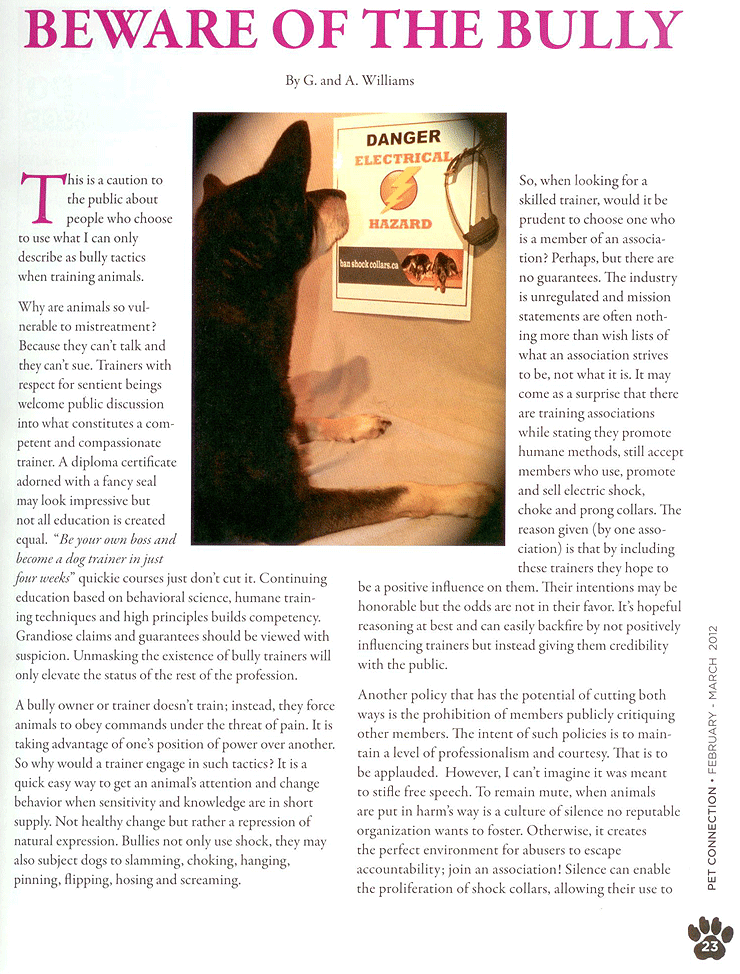
BEWARE OF THE BULLY
Pet Connection Feb /March Issue
 start of page
ALERT TO ALL SHOCK COLLAR USERS
This is a very disturbing & sad report sent to us by a new supporter . She wants her story posted so no one else will ever have to experience a tragedy like this.
I hope this gets information out there that prevents the same tragedy for someone else with multiple dogs and gets these things banned. I have had complaints about barking from a previous neighbor and because I rent and foster dogs, I didn't want to possibly lose my place to live or my dogs. I had tried several ways of deterring the barking but nothing seemed to work for long. The shock collar was the last resort to solving the problem and seemed to be working. I only put it on the one dog when I have to leave and take it off as soon as I get home. I haven't seen any issues with the collar or her behavior so figured the problem was solved, as best as it could be.
Last week I was just finishing up at work when my neighbor called and said that she had heard a dog fight in my house and that I needed to get home as soon as possible. I was about 20 minutes away, so hurried home as fast as I could. When I pulled up, two of my neighbors said they heard a fight and screaming and the one neighbor said she went in the house and broke it up and covered up the one dog. Thank goodness I don't lock my doors.
When I walked in three of the little dogs were outside and my dog wearing the collar was inside along with the injured dog and a foster I was caring for. Blood covered the whole floor and the bottom cupboard cabinets. There was a carpet askew and covered in blood and my injured dog was laying in a pool of blood on the doggie bed and whimpering. I tried to look at her injuries but she screamed, so I just covered her with another blanket and got her to the vet as soon as I could.
Without going into the grisly details, the vet said it was the worst injuries he'd ever seen. He did surgery and thought she was going to survive, but she succumbed to her injuries by the second night and passed away.
In assessing her injuries, I could tell it was the dog wearing the collar because she is the biggest one I have and she was covered in blood when I walked in. This is a dog that was best buddies with the dog she killed. After cleaning up the mess and assessing her slight injuries, I figure that the dog that was killed, my alpha Italian Greyhound, gave a warning to another dog and the bigger female that was wearing the collar, she is the peace keeper, probably tried to intervene and got shocked when she growled. This probably triggered her becoming aggressive toward her buddy and with the growling and barking only increased the shock and escalated the fight to having fatal consequences.
I work with dogs and am not a fan of pinch collars or ecollar training, but was desperate to get the barking issue under control. I have since started crating the dogs while I am gone. Had I known the risks to my babies, I never would have used the shock collar. Even when talking to the pet store employees about my options, the risk of a shock collar never came up. I went down there yesterday and talked to them and they never were told that during the recent training they had from the manufacturer.
Now I have lost my precious Ruka and Joy doesn't understand what she did. The pack is hurting and my ability to foster dogs is under question. This was such a senseless tragedy. I hope somehow my story helps. Let me know if I can help in any other way.
Ms. S, California, USA
start of pageGood Cop, Bad Dog: Texas K-9 is Removed From Service After Biting
by Zoe Szathmary
DailyMail.com, March 2017

“...Though Rico had a shock collar on, Kjergaard said that ‘the handler hit the collar and the dog still would not obey’...” Full article here
start of pageFighting Dog Seized by RSPCA Savaged Worker
The Advertiser, Sean Fewster, March 2017
“...It is alleged a raid on Hamilton’s home discovered items used to turn dogs deadly including electric-shock collars, anabolic steroids and other drugs...” Full article here
start of pageTEXAS A&M UNIVERSITY
College of Veterinary Medicine & Biomedical Sciences
Mission Statement: We, the faculty and staff of the College of Veterinary Medicine, are a community of scholars committed to:Caring about animals and people; curing and preventing animal disease; creating new knowledge, new therapies, and new learning opportunities; and communicating with students, veterinarians, scientists, and the public.
Risks of Shock Collars and Fences
There are many options available for new pet owners when it comes to training the new member of the family. The most controversial method of training is the use of shock collars or shock fences. Many stories and photos have surfaced in the media recently showing animals who have been harmed by these devices.
The main reason some pet owners have chosen to use shock collars is to stop their dog from barking. There are two types of shock collars commercially available. One type is remotely controlled by the owner and the other is activated by a bark. Shock fences are a little more technical and are used to keep the dog inside a designated boundary. The pet owner buries wires in the yard that mark the boundary the pet can encompass. If the pet crosses this boundary, the collar located on its neck will deliver a shock.
According to Dr. Bonnie Beaver, veterinarian at Texas A&M University College of Veterinary Medicine & Biomedical Sciences, "In theory, they provide an instant punishment for a bark (the bark activated shock collars) or for a wrong move (remote controlled ones) when training a dog." However, the potential for over use and abuse of these devices far outweighs the benefit.
There are many instances where shock collars and fences do not work. Beaver offers this example in reference to shock fences, "Strong instincts to chase (a running deer, a jogger, a stray dog) may cause a trained dog to chase through the boundary. Some dogs do not respect the shock and will run through the 'boundary' suffering the shock as they do." This has been found in many cases, rendering the shock to be unsuccessful.
Many people have found shock collars and fences to be not only ineffective but also inhumane. "These devices [shock collars and fences] can provide an excessive punishment to the point that the dog is terrorized," said Beaver. "They can be ineffective because the amount of shock is too little (poor contact, too much hair, weak battery). They can be used out of context (remote control) because the owner is mad at the dog and 'zaps' at an inappropriate time out of anger. It can also do significant psychological damage to a dog that does not connect the shock with the reason for the shock. The shock is generally considered to be inhumane."
There are many more humane methods for training that have been found to be more effective. Beaver suggests, "collars for barking dogs that squirt a citrus smell and make a hissing sound that have actually been proven to be more effective than the shock collars. And of course there are real fences for yards that are safer and more effective than the shock fences."
start of pageTHE SLED DOG COALITION REPORTS SHOCK COLLARS ARE ONE OF THE ABUSES SLED DOGS ARE FORCED TO ENDURE
It is that time of year for the Iditarod sled dog race in Alaska. So why is banshockcollars.ca talking about the Iditarod? The use of shock collars are just one of the abuses sled dogs are forced to suffer during training for this race. Dogs are kicked, beaten, whipped, shocked, forced to run sick and injured and in some cases dragged to their deaths. The people that support and participate in the brutalizing of these dogs meet the definition of 'evil'. Evil has no boundaries so it is likely that sled dogs will not be the only casualties. The Sled Dog Coalition is fighting hard to stop this cruelty. HOW YOU CAN HELP.
Electric collars used on dogs:
"Due to my heavy involvement in this "sport," I've been able to witness atrocities that many will never hear of or see - nor would they want to. These include: Dogs shocked with electric collars to prevent them from fighting while running in harness."
Ashley Keith, former musher and Iditarod kennel employee who now rescues and rehabilitates abused sled dogs. Email to the Sled Dog Action Coalition, April 30, 2008
Electric shock to terrorize dogs is very detrimental:
"The use of electrical shock to terrorize a dog is very detrimental on many levels. It will force a dog to exceed his reasonable physical limitations and predispose him to painful injuries. And psychologically it creates fear and apprehension which degrades his quality of life. The shock stimulus itself, if inaccurately calibrated, can cause localized burns or sudden cardiac arrest."
Dr. Paula Kislak, President of the Association of Veterinarians for Animal Rights, September 7, 2004. Email to the Sled Dog Action Coalition
start of pageWORLD UNION OF GERMAN SHEPHERD CLUBS (WUSV) BACKS KENNEL CLUB CAMPAIGN FOR A COMPLETE BAN ON ELECTRIC SHOCK COLLARS!
The Kennel Club is delighted that the two member clubs of the WUSV in the UK, the British Association for German Shepherd Dogs (BAGSD) and the German Shepherd Dog League of Great Britain (GSDL), are supporting its campaign to completely ban electric shock collars.
The endorsement of the largest German Shepherd clubs in the country will add tremendous clout to the Kennel Club's argument that it is not necessary to use an electric shock collar to train any breed of dog – even those bred as working dogs or police, military or security dogs...
Full report here. This page was printed from The Kennel Club.
Please visit http://www.thekennelclub.org.uk
start of pageSHOULD DOG-BOARDING HOUSES USE SHOCK COLLARS?
Submitted by KATU.com Staff
Tuesday, January 11th, 2011, 11:37am
A Portland dog-boarder is under fire for using a shock collar on this dog without its owner's consent. The dog's owner says the dog was wearing the collar when she came home from "Safe Journey Dog Boarding" in Southeast Portland after Christmas.

The dog's owner says he noticed something was wrong when he asked Bubba "What time is it?" - a question that normally makes her howl. Instead, he says she yelped, put her tail between her legs and fell down to the floor.
And there, underneath her fur, was the collar. This finding was even more unexpected given that the dog boardinghouse, which is in a Victorian home, advertises itself as crate-free -- where dogs have the freedom to roam around just like they would at home.
"I expect they would contact the people on the contact list and say, 'Oh, your dog seems really anxious, really out of control, really x-y-z," said Kyle Gilmore, Bubba's owner. "'Is there something you do to calm her down? Or is it OK if we do this?'"
It turns out that a man named Craig Capley bought "Safe Journey Dog Boarding" this past April and says their "home style" approach usually works well. However, Capley tells us that because Bubba is a dominant, alpha female a more tightly controlled method was the only way to calm her down and avoid fights.
Gilmore had boarded Bubba at the Safe Journey Dog Boarding house in Southeast Portland for years prior to Capley's purchase of the shop. However, under Capley's ownership this past Christmas, Gilmore boarded Bubba once more. And when Bubba came home she was wearing that surprise: a "shock collar" around her neck.
Gilmore says he can't believe employees would ever do this, especially without his consent. However, Capley says the collars are only used in emergency situations. He also says the collars are not abusive -- saying the shock is more like static electricity than an actual "shock."
start of pageVETS ON BEHAVIOR PROCLAIM, NEVER USE SHOCK COLLAR
How to Choose A Dog Trainer – Steve Dale
start of page'DOG WHISPERER' ROW AS TRAINER ACCUSED OVER ELECTRIC SHOCK COLLARS TOURS BRITAIN
By FIONA MACRAE 6th March 2010
A dog trainer to Hollywood stars begins a UK tour tonight amid warnings from animal welfare groups that his techniques can cause unnecessary pain and suffering.
Cesar Millan, also known as the Dog Whisperer, is credited with turning tens of thousands of disobedient and aggressive animals into perfect pets.
He has a string of bestselling books and a successful TV show to his name and satisfied clients include Oprah Winfrey, Nicolas Cage and Scarlett Johansson.
His philosophy is that the owner, not the pampered pooch, is 'leader of the pack'. But the RSPCA claims he has advocated using electric shock collars and restricting dogs' air supply with nooses and leads, as well as pinning them down to the floor. Mr Millan, who denies the electric shock claims, teaches that dogs should be treated as dogs, not substitute children. He believes that if the owner shows he is a strong, calm leader, the dog will become passive, loyal and obedient. Read full article here
start of pageARE THE DOG WHISPERER'S METHODS HARMFUL?
In this news report Cesar shocks and chokes dogs and then states, "My way is not the only way - it's just a way."
'DOG WHISPERER' CESAR MILLAN SUED BY TV PRODUCER
Cesar Milan sued by TV Producer claiming his dog sustained serious injuries and distress during training at Milan's Dog Psychology facility. The story published by USA TODAY HERE.
start of page'DOG WHISPERER' TRAINING APPROACH MORE HARMFUL THAN HELPFUL
Denver September 6, 2006
The training tactics featured on Cesar Millan’s “Dog Whisperer” program are inhumane, outdated and improper, according to a letter sent yesterday to the National Geographic Channel by American Humane, the oldest national organization protecting children and animals.
In the letter, American Humane, which works to raise public awareness about responsible pet ownership and reduce the euthanasia of unwanted pets, expressed dismay over the “numerous inhumane training techniques” advocated by Cesar Millan on “Dog Whisperer.” Read More Here
start of pageAn Overview Of Cesar Millan's Methods And His Training Facility.
by Coporate Casket /iilluminaughtii
‘Dog Whisperer’ Cesar Millan Sued in Pit Bull Attack
Feb 2015, Rubin Vives, Los Angeles Times
“...This is not the first time the training facility has been at the centre of a lawsuit against Millan. In 2006, a television producer sued Millan and claimed his dog was injured after being suffocated by a choke collar and forced to run on a treadmill at the training facilit...” Full article here
start of pageUNACCEPTABLE BEHAVIOR; NOT THE DOG, THE TRAINER !!!
How do we protect our pets and ourselves from those willing to harm us for profit? In a world always looking for the quick fix, we have to be diligent. It takes fortitude and a strong ethical foundation to resist the temptation quick fixes offer. Otherwise, we are deceived into believing in false miracles. Electric shock collars are a perfect example.
Shock collars have two protruding electrodes that penetrate an animal's fur under the neck where it's sensitive. The trainer delivers a shock of varying intensities and duration via remote control. For decades, it was mostly hunting dogs that have had to endure electric shocks but now shock collars and electronic containment systems are available in most pet stores for anyone to purchase.
Why would trainers use electric shock to train? Simply put it produces immediate behaviour changes, without ever addressing the reason for the behaviour, enabling a higher turnover and more income. Many pet owners buy into the authority figure of the trainer and don't ask 'at what cost to the dog?' Studies show that dogs who suffer shocks often develop deep-seated behavioural problems and are more prone to attacking people and other animals. Shocked dogs often take on submissive behaviours in an attempt to stop being hurt, withdraw, or shut down altogether. This new subdued behaviour is construed as well behaved enabling the trainer to claim success. The damage can be severe, both physical and psychological. Many positive based trainers have a list of 'ruined' dogs they've tried to rehabilitate, their spirit battered by a trainer using shock collars.
Trading on our desire for quick results, profit motivated trainers will use a number of ruses to hide the fact they are using shock collars or use semantics to mask the truth. Insisting they need to work with the dog alone for a few days is a sure sign you wouldn't approve the methods used. Claiming they use training collars that 'tap', 'tingle' or 'just get the dogs attention' are electric shocks rebranded. The most popular trick is to have you try it on yourself, at a low setting on the arm knowing what's about to happen. This in no way replicates the pain, fear and anxiety the dog experiences. Sadly, many pet owners fall for the trainer's propaganda that this is a safe and humane way to teach their dog.
There is no need to use pain to train as there are countless professional trainers who have the skills to successfully train your dog in a humane and respectful manner.
Renowned animal organizations including; SPCA's, Humane Societies, Veterinary Associations, The Kennel Club, The Association Of Pet Behaviour Counsellors, WSPA Canada and many others are opposed to the use of shock collars.
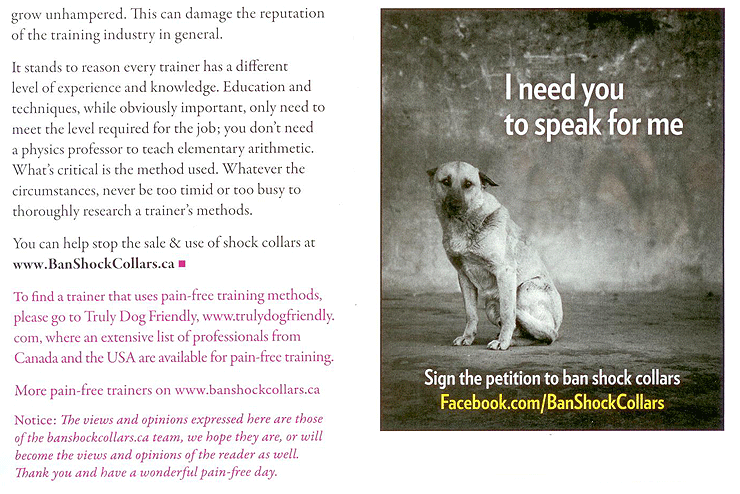
Please sign the petitions to ban the sale and use of shock devices on all animals.
G. Williams
Ban Shock Collars Advocate
SIMPLY SHOCKING
Pat Miller - Dog Trainer
Rufus is a typical adolescent Labrador Retriever: Large, full of energy, and eager to explore beyond the boundaries of his Richmond , Utah , yard when released from the confinement of his pen. The Ashbys, his owners, are a typical Lab family: Dad, mom, and several kids, all of whom possess a strong desire to be responsible pet owners.
As often happens, Rufus' energy was a bit too much for the younger children. Despite several attempts to train him not to jump up, he was still knocking the little Ashbys flat. And despite the family's best intentions, Rufus was not cooperating with their efforts to keep him within the limits of his own unfenced yard.
Imagine the Ashbys' delight one day when, shopping at their local "big box" pet supply store, they came across a product that promised to solve both problems with the push of a button. The product combines an underground electronic containment system with an additional remote control unit for use with supervised training. In other words, a shock collar. The family bought the unit, took it home, and started training Rufus.
They used the product for a few days and were quite pleased. Their dog was quickly learning not to jump on the kids, and life with Rufus was already becoming easier. The Ashbys made plans to lay the underground wire for the containment system over the upcoming weekend. Meanwhile, Rufus was confined to his pen, wearing his collar, while the family was gone all day.
Upon arriving home one rainy day afternoon that week, Darren Ashby, an electronic engineer, sent his oldest son out to the pen to take Rufus for a walk. The boy came back in and said Rufus wouldn't let anyone get near him. Dad went out to help, and was horrified by what he found. Read full article here
start of page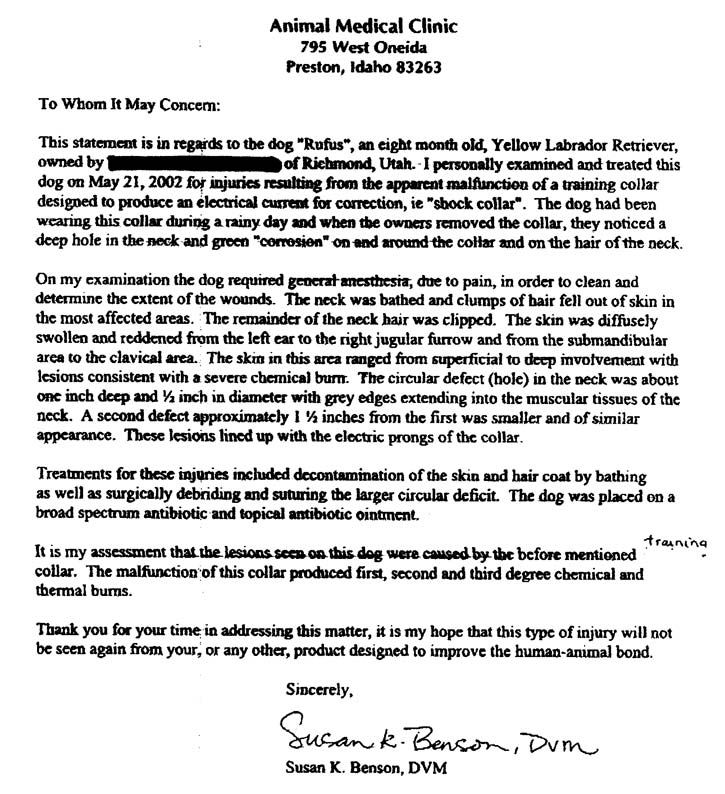 start of page
Experts, former employees condemn operations at Rescue Rehabilitation facility that housed killer dog
By Amy Poulter - June 15, 2017
“...“The owners abused the shock collars pretty badly,” Nash said. “They would hold the button down for more than five seconds until the dog was just screaming at the top of its lungs...”
“...When I started working there I was really excited to help give these dogs a second chance,” Nash said. “As the weeks went by, only some dogs were being trained. Dogs that weren’t being trained were being adopted out. It was too huge a risk and I couldn’t do it anymore....” Read full article here
start of pageWHO WILL RESCUE THE RESCUED
B.C. Pet Connection Magazine - Nov 2012
 start of page
ANIMAL DEFENDERS INTERNATIONAL WELCOMES A BILL TO OUTLAW THE INHUMANE TREATMENT OF ELEPHANTS
Posted: 18 March 2009
A bill has been passed in the state of Connecticut to outlaw the use of elephant hooks and electric shock devices on elephants in circuses and traveling shows.
The move comes as the trial of Ringling Brothers Circus over allegations of elephant abuse nears its conclusion, and a media storm surrounds the resurgence of using performing elephants in circuses in the UK .
Under the new legislation, anyone who works with circus elephants would also be guilty of a criminal offence if found to possess an electric shock device or elephant hook.
Animal Defenders International found a catalogue of elephant abuse in the U.S during investigations for the international "Stop Circus Suffering" campaign.
Among the physical abuse was the universal use of elephant hooks to control and punish elephants, electric shocks given during training sessions and as elephants walked to the big top, bare chains used on elephants' legs, and elephants being beaten and kicked.
Bill HB 6555 ("An act concerning the humane treatment of elephants"), was debated and passed by the Joint Environment Committee of Connecticut's General Assembly. It was introduced by Representative Diana Urban (Dem) with the purpose of prohibiting the inhumane treatment of elephants.
The bill has now been referred to the Judiciary Committee, and will take effect in October.
For further information, contact ADI Public Relations Officer, Ally MacDonald Office Tel: 020 7630 3344. Email: pr@ad-international.org
Click to read the Executive Summary of Animals in Traveling Circuses: The Science on Suffering U.S
start of pageSHOCK COLLAR FOUND ON PET DOG ROAMING ON VALE BEACH
BBC NEWS WALES - April 18, 2011
Excerpt ... Magistrates were also told that the dog, which kept escaping, was known at a local kennels as "the dog with the shock collar". The court was told the collar emitted its electric shock when the dog wearing it went near to a specific fence.
start of pageSHOCK ADS
The following are excerpts, quotes and statements taken from advertisements by various manufacturers, retailers and animal trainers promoting and selling shock collars on the internet.
- Your pet will quickly learn to SHUT UP at the mild correction without having to suffer the more intense stimulus.
- Training dogs takes many hours, unwavering patience, and knowledge of what you are doing. xxxxx collars are more effective in less time and require less work...
- ...Voice Recognition feature minimizes false triggering.
- ...We only sell top of the line dog collars.
- ...Mild shock does littl...
- ...Intense shock works but, the trauma caused by an electronic jolt initially confuses the animal making the pet suffer intensely throughout the process.
- The shock level has never any negative influence on your pet.
- ...works faster, more effectively and more humanely than conventional barking collars.
- If your product fails to operate or perform satisfaction for any reason, return it within one year of the date of purchase for free repair.
- One down side to tone as a warning is the high number of products in the world today that beep and buzz.
- ...when you work with multiple dogs, you give dog one a warning and dog two thinks he has done something wrong and is about to get a correction.
- We sell good collars from manufacturers who stand behind their products.
- We like to think of the xxxxx as a kind of Chinese water torture for barking dogs. At first your pet will scarcely notice it. But after about 48 hours it will do anything to turn it off!
- ...you may mistake your pet for a rather large mouse. He'll be that quiet.
- ...bark control without shock or pain.
- We just want it to be uncomfortable for your dog, like when you bump your elbow on the table.
- Myth is that remote training collars can burn a dog's neck not true.....hot spots can develop and create a sore that can be mistaken for a burn.
- Make sure you buy a collar that is waterproof.
- The more forceful, non –electric collar is a pinch collar.... it's important to be trained in the proper usage.... As it can damage the animal's neck.
- ...Improved technology has made them much easier to use
- Far from being inhumane, they can actually shorten the time you spend cleaning up and chasing after your dog.
- Rough play can sometimes set these devices off.
- Shock collars are suitable for any dog over 6 months of age...
- Dogs desire to chase will often override a shock.
- Check daily for signs of rashes and sores
- Don't forget to turn off the collar so you don't accidentally shock.
- Different collars available make for choosing the wrong one likely.
THE "LAST RESORT" ARGUMENT FOR SHOCKING ANIMALS
As inflicting pain on animals becomes increasingly difficult to justify, proponents of shock devices steadfastly stand by the ‘last resort’ defense, claiming that shock devices are necessary when an animal cannot be trained in any other way. Questions that beg to be answered include whom makes this call, what standards should be strived for, and at what point are all other methods considered exhausted?
start of pageShe'll be doggone: Pooch missing 8 months reunited with Minnesota family
BMTN STAFF, MAR 8, 2018
They say you can't go home again, but maybe Avery the dog didn't get that memo.
She'd been gone for more than eight months and KARE-11 reports owners Liz and Chad Klavetter had given up on seeing their two-year-old boxer-pit bull mix again.
After all, the fliers and online postings and calls to the authorities had yielded nothing in the weeks and months after Avery slipped through an invisible fence and disappeared last June, KARE says Read Article Here
start of pageDog spends weekend up a tree

Border Collie Escapes Electronic Fence.
Tweentribute.com Aug. 13/13.
Excerpt.... A dog in Davenport, Iowa, had a rough weekend. The 7-year-old border collie, Laddy, vanished from his home sometime early Friday. Though his yard contains an Invisible Fence, which is an electronic boundary, the battery in his collar wasn't working.
Laddy evidently saw his chance to escape. Full story here
QUEBEC TAKES STEPS TO PROTECT PETS FROM SHOCK COLLARS, PRONGS
by Billy Shields, Global BC, July 7, 2014
PIERREFONDS, Que. — A provincial law governing the humane treatment of animals has quietly taken effect, and it may cause some Montrealers to make changes to how they deal with their dogs. Full article here
CALLS TO BAN DOG SHOCK COLLARS FROM NZ PET STORES
Newshub March 4/17
Animal advocacy groups and veterinarians are supporting calls to take electric shock dog collars off the shelves of Kiwi pet stores.
Pet store Animates this week responded to concerns from a customer about the collars, saying it stands behind Petsafe Anti-Bark Collars to "be used to correct many nuisance behaviours, which could otherwise result in the euthanasia of animals".
"Animates are very passionate about the welfare of pets and do not sell products that we deem inhumane," the store told NetGuide. Animates provides "ongoing training for our team members to ensure that the right collar is recommened as appropriate for the dogs' behaviour/size/age and importantly that the collars are used correctly".
But the collars are banned in some countries, and the New Zealand Veterinary Association (NZVA) says many dogs respond to the shocks with fear, anxiety, shutdown and aggression.
"Not everybody is skilled at reading a dog's body language, and some of the more subtle signs of fear and anxiety - such as holding ears flat and tucking tails down - may not be understood by an unskilled trainer whose dog is enduring punishment-based training," says NZVA operations manager Rochelle Ferguson.
Ms Ferguson says the NZVA would like to see the collars restricted to appropriately trained people with qualifications and experience in animal behaviour.
"The potential for unskilled users to make the problem behaviour worse and cause stress and anxiety for their dog is far too high for them to be purchased and used without expert oversight."
She says in cases of severe and prolonged barking, dog owners should seek advice from a veterinarian or qualified dog behaviourist.
"For some dogs it may be a matter of resolving their boredom. They are a pack animal, and being left alone for more than four hours has been shown to reduce some dogs' welfare."
Animal advocacy group SAFE agrees and would like to see the products banned.
"Electric collars are often used as a 'shortcut' to proper dog training," says executive director Hans Kriek.
"When used by inexperienced trainers, these collars will do more harm than good. We would certainly recommend that Animates stops selling these collars."
Petco to Stop Selling Electronic Shock Collars, Encourages 'Fear'-Free Training Methods
By Georgia Slater, People.com, October 06, 2020
"Shock collars have been shown to increase fear, anxiety, and stress in dogs," Petco CEO Ron Coughlin explained. Petco is stripping their shelves of electronic shock collars in an effort to promote positive reinforcement pet training methods... Full Article Here